
Adopting the latest power supply technologies of intelligence, modularization, miniaturization, light weight and fast charging, it aims to enhance the integration, safety, reliability, adaptability, sustainability and scalability of mobile power supplies. It effectively solves bottleneck problems such as difficulties in power supply during movement, uninterrupted power supply, and power supply under high temperature and extreme cold conditions. Developed with three-proof design in accordance with relevant military standards, it is resistant to vibration, collision and rain.
Introduction
Existing portable power supplies for communication equipment suffer from multiple drawbacks:
Poor safety and reliability
Low energy density and short service life per charge
Limited charging cycles and inferior durability
Long charging time and low operational efficiency
Excessive weight and bulk, resulting in poor portability
Non-modular design and low versatility
Poor resistance to high and low temperatures and low environmental adaptability
These issues severely hinder the normal operation of equipment under complex and extreme climatic and environmental conditions. There is an urgent demand for high-performance, multi-purpose universal portable power supplies to deliver stable and reliable power support.
Core Technologies
Extreme Temperature & Humidity Adaptability
To address the poor temperature tolerance of conventional batteries, we conduct modeling and analysis on the battery temperature field, upgrade the heat dissipation and heating units, optimize the thermal management system, and develop a newly structured battery enclosure. The power supply features adaptive temperature regulation and operates stably within the temperature range of -30℃ to 60℃.
Environmental Resistance
Designed in compliance with relevant military standards, the product adopts three-proof design, delivering excellent resistance to vibration, impact and rain.
Technical Description
1、High Environmental Temperature Adaptation Technology of Power Supply
(一)Modeling and Simulation of Battery Pack Temperature Field:
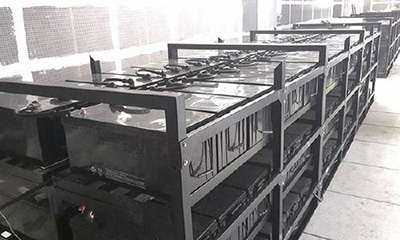
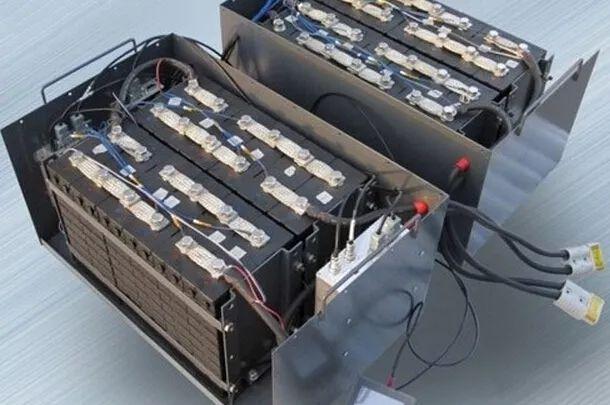
This research investigates the thermal characteristics of batteries across high and low temperature ranges and analyzes their heat transfer mechanisms to establish a battery temperature field model.
Based on model simulation, we analyze how battery series-parallel connection modes, pack layout, enclosure structure, heat dissipation devices, heating units as well as heating and cooling strategies affect the battery temperature field. Optimal control schemes for thermal management are finalized through extensive simulations and experimental verification.
(二)Improvement and Optimization of Battery Heat Dissipation and Heating Devices:
To expand the operating temperature range and ensure stable performance of batteries under varying high and low temperature conditions, this project conducts research on both heat dissipation and heating devices.
Improvement and optimization of heat dissipation devices: In accordance with the temperature distribution of the battery pack, multiple heat dissipation methods including air cooling, liquid cooling and air conditioning refrigeration are combined. Intelligent algorithms are adopted to regulate the temperature of the battery pack.

2. Improvement and optimization of heating devices: To enhance the low-temperature performance of batteries, heating structures are arranged inside the power supply enclosure. Algorithms are applied to adjust heating output and control heating rate based on the temperature distribution of the battery pack. Additionally, each unit is equipped with a wide-temperature power module, which maintains a normal internal temperature of the enclosure when the ambient temperature drops below -20℃.
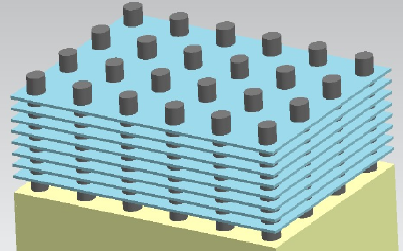
3. Design of battery enclosure with innovative structure: Super heat pipes made of composite non-polar materials are rationally installed inside the enclosure. Leveraging the excellent thermal conductivity of heat pipes, the enclosure achieves improved heat dissipation at high temperatures and heat retention at low temperatures.
4. Optimization of Thermal Management System
1) Optimization of thermal management strategies: Develop optimized strategies for thermal data collection, analysis, judgment and control to realize intelligent temperature regulation of the enclosure.
2) Optimization of temperature acquisition and control: High-precision temperature acquisition modules are installed at key positions inside the battery enclosure where temperature field variations are prominent, so as to accurately collect temperature data of batteries and the enclosure. Based on the acquired data and thermal management strategies, fans, heating units, air inlets, air outlets, coolant circulation and other equipment are optimally controlled, ensuring the power supply operates within the safe temperature range of -30℃ to 60℃.

2、Multi-purpose Safety Protection Technology for Power Supply
(一)Multi-level Battery Protection Technology:
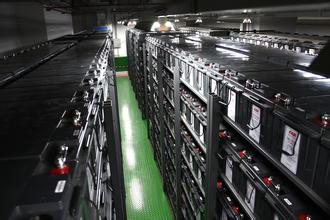
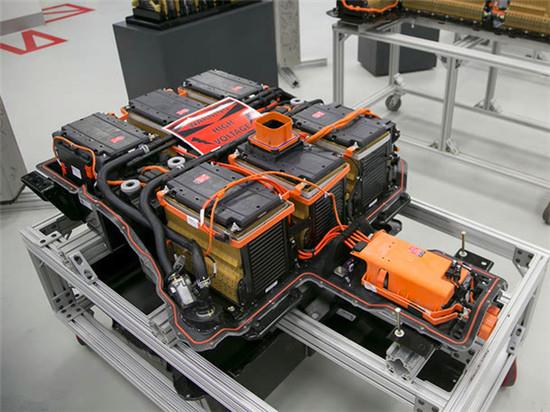
To eliminate safety hazards caused by overcharging and overdischarging, and prevent performance degradation of the power supply and batteries, multiple detection, protection and backup functions are integrated into the power unit. The system monitors battery temperature, overcharging, overdischarging, discharge overcurrent, short circuit and other operating states. Once the control algorithm identifies abnormalities, the control system will be activated for rapid response and troubleshooting to ensure stable operation of the power supply.
(二)Vibration and Impact Resistance Safety Management Technology:
1. Vibration isolation technology: Vibration isolation tests are conducted on the battery pack under various vibration conditions. The frequency spectrum and bandwidth of sinusoidal vibration, random vibration and impact interference are analyzed to determine the maximum allowable responses of the battery pack, including natural frequency and maximum transmissibility. The battery enclosure is made of new materials with corrosion resistance, vibration and impact resistance, and the vibration-damping structure adopts metal-rubber composite materials. The dual-layer protection delivers optimal vibration isolation performance.
2. Impact resistance technology: High-response, high-sensitivity and high-precision MEMS high-g acceleration sensors are deployed to detect impacts on the power supply structure. The impact intensity is calculated via algorithms. Once the value exceeds the safety threshold, the batteries will be instantly disconnected from the power management system to avoid short circuit and overheating risks caused by impact.
Technical Performance Indicators:
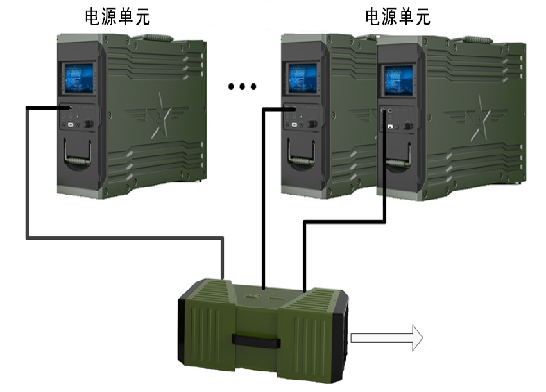
一、Supports flexible series-parallel connection, delivering large-capacity energy storage, charging and discharging capabilities.
① Maximum capacity: 320Ah
② Maximum continuous discharge current: 120A
③ Maximum charging current: 30A
④ Charging voltage: 220V
⑤ Output voltage: DC 12V, 24V, 36V; AC 220V
二、Environmental Adaptability
Operating temperature range for charging and discharging: -30℃ ~ 60℃
三、Other Technical Indicators
① High-precision electricity metering: Accuracy above 80%
② Cycle life: 2000 cycles
③ Self-discharge rate: 1% per month; remaining capacity ≥ 80% after one year of storage
④ Vibration and impact resistant design
